

ISO 27001 Consultant and Lead Auditor Course Content
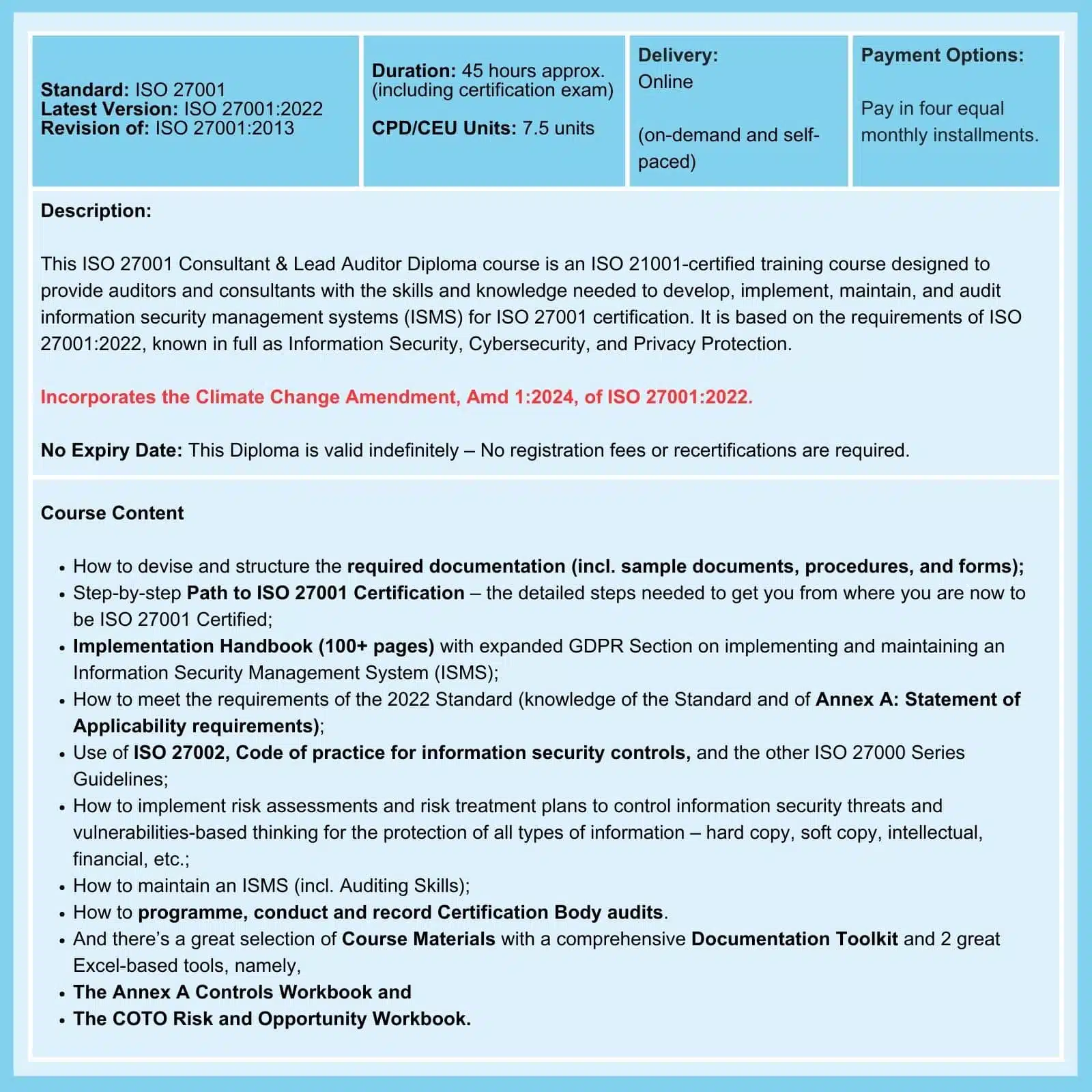
This ISO 27001 consultant and Lead Auditor course is primarily intended for ...
- ISO 27001 Consultants & Advisors: Where you wish to have a professional qualification to offer prospective clients.
- Experienced Information Security Advisors and similar Professionals: to upgrade your qualifications to a recognized international standard.
- Newcomers to Information Security Management Systems: You don't need to be an expert. You'll be taken on a practical journey from getting started to Certification.
- Experienced Information Security Management Professionals: Understand the impact of the Standard, the type and extent of documentation required, best practice in maintaining an ISMS and best practice when auditing to Certification Body requirements.
The course provides you with the Auditing Skills, the Knowledge of the Standard (including Annex A - Information Security Controls) and the practical application of that knowledge with Audit Scenarios to enable you, as Audit Programme Manager, to undertake and manage Internal Audits for your Organization.
Key Features:
- Course is accredited to ISO 21001, the standard for Educational Organizations Management Systems
- An ISO 27001 Consultant and Lead Auditor certification is awarded upon passing the certification exam
- Certificate is immediately available online after the successful passing of the exam
- Certificate comes with a shareable QR code for instant verification of credentials
- Lessons range from 15 minutes to 1 hour, typically 20–30 minutes, ensuring that each topic is covered in suitable detail
- Course includes practice with scenarios that include dialogues
- Course includes 24/7 Live-chat Learner Support
- Course includes a learner manual, a copy of the standard, and samples of relevant forms and other documents
- Course comes with full-audio narration and Closed Captions for accessibility
- Courses are hosted on your browser so that no software has to be downloaded avoiding security risks.
- Course comes with quizzes, practice with scenarios, and open-book certification exam
- Course is hosted on your browser so that no software has to be downloaded avoiding security risks.
- Features cross-device compatibility (courses can be taken on any desktop, tablet, or mobile)
- Offers full-resume feature (end a session mid-lesson and continue exactly where you left off, even from a different device)
- Features real-time interactive content in a secure web-based environment
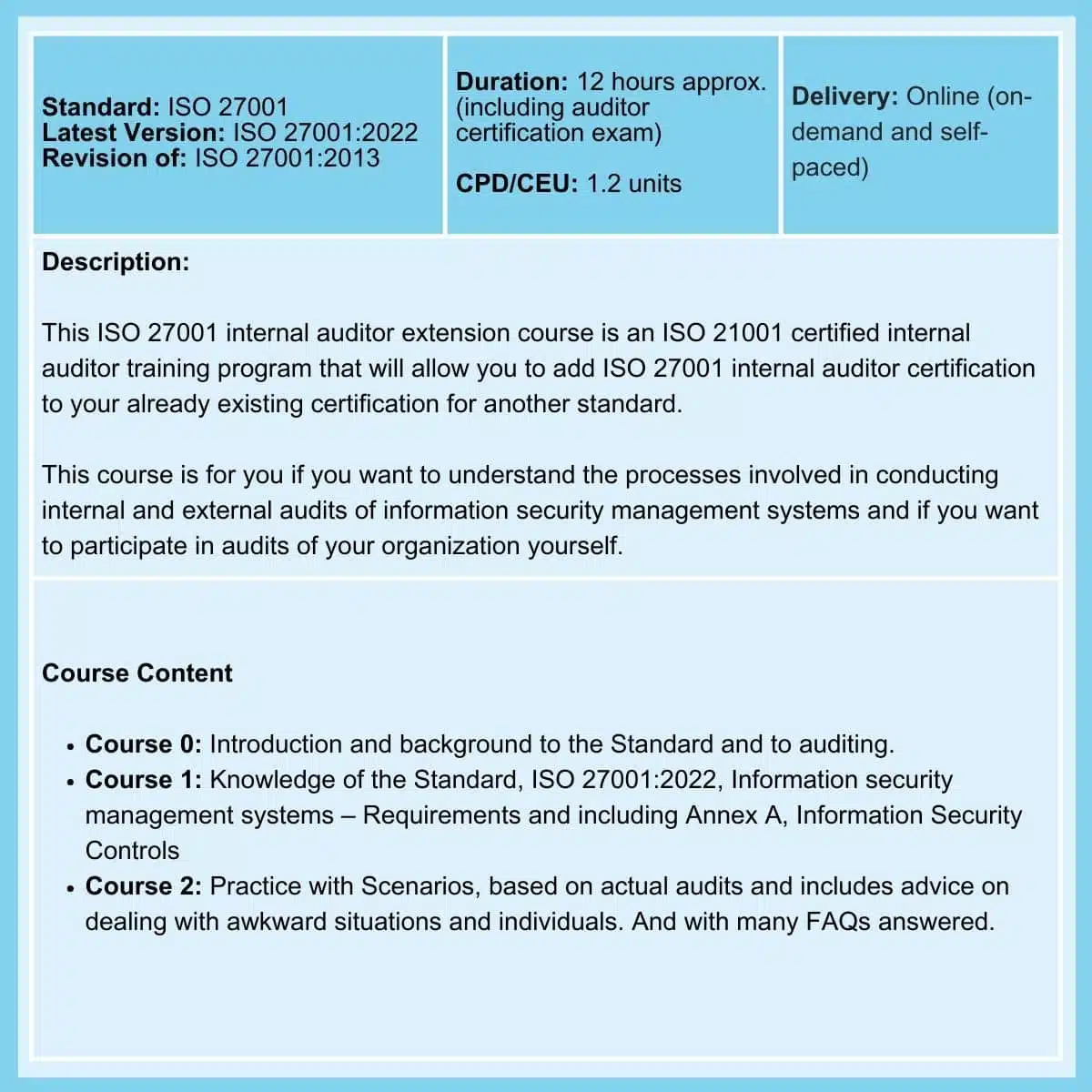
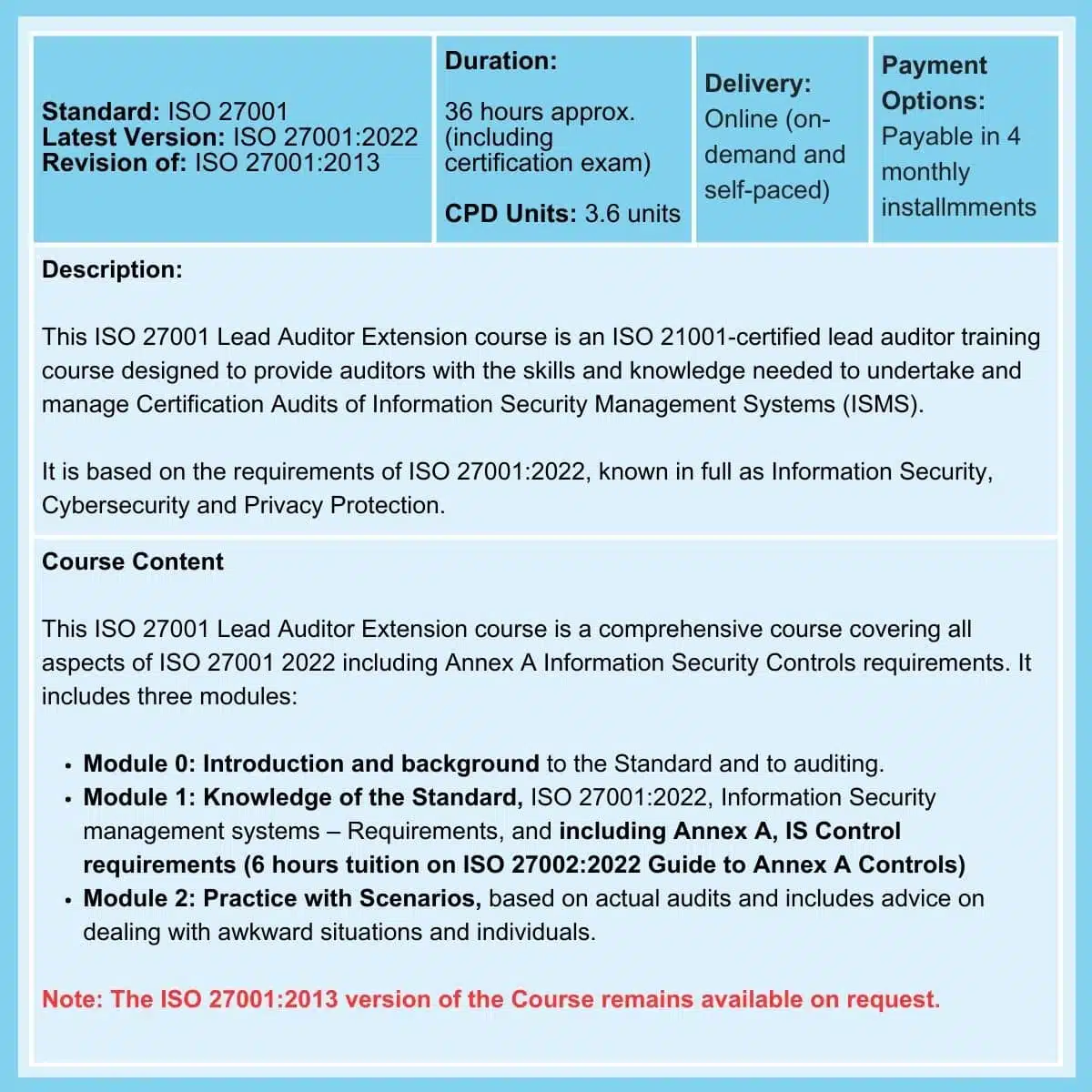
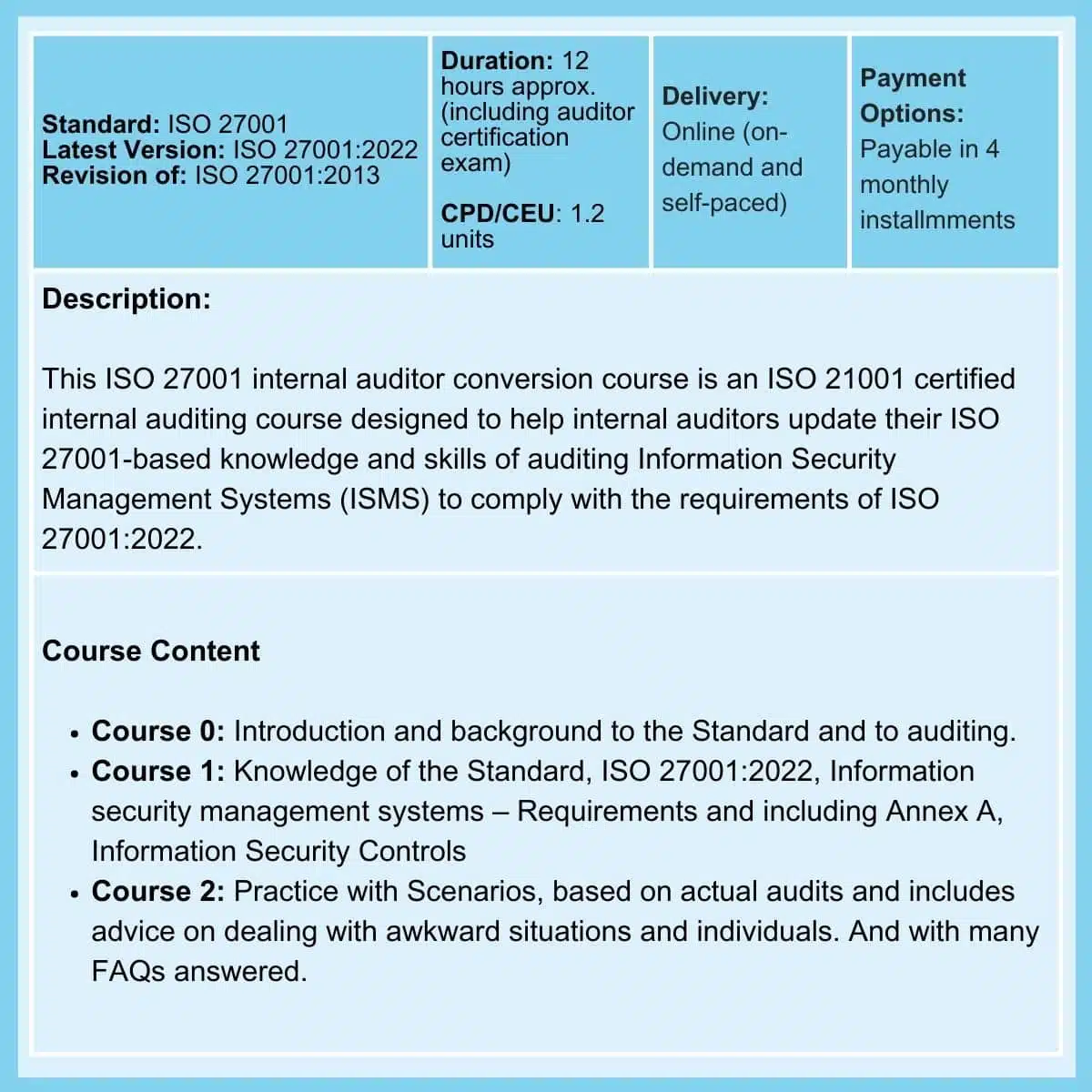
- Offers a clear learning path (once you've completed the internal auditor course, you have the option to progress to the lead auditor, up to the consultant and lead auditor course.
- Examination and certificate fee are already included in the course fee
- Payable via PayPal or Stripe using any credit or debit cards
- Option to pay in 4 monthly installments available
What will I learn from this ISO 27001 Consultant & Lead Auditor Diploma course?
This ISO 27001 Consultant and Lead Auditor course is for you:- If you wish to be an ISMS Consultant.
- If you are Management Representative for your organization and are the Audit Programme Manager for ISMS internal audits.
- If you wish to develop and implement an information security management system for your organization.
- If you are required to perform ISMS internal audits within your organization
- If you are required to perform ISMS supplier audits
- If you wish to improve your career prospects
- If you wish to understand the processes of conducting internal audit or external audits
What will I learn from this ISO 27001 Consultant & Lead Auditor Diploma course?
This comprehensive ISO 27001 Consultant and Lead Auditor course is divided into four Modules:
- Module 0: Introduction and background to the Standard and auditing - Explore ISO 27001 and its role in managing information security, showing how consulting and advisory activities support ISMS design, development, and compliance readiness. Understand your consulting perspective in guiding organizations through ISO 27001 requirements and implementation challenges
- Module 1: Auditing Skills based on ISO 19011:2018
- Auditing Skills - Develop the ability to plan and conduct ISMS assessments with actionable guidance for ISO 27001 alignment. Review control implementation, verify policies, and recommend improvements
- Terms and definitions - Master ISO 27001 terminology and ISMS-specific language to communicate effectively with clients and stakeholders. Focus on concepts such as control objectives, risk treatment, and information asset management
- Principles of auditing - Apply audit principles to advisory scenarios that enhance ISMS effectiveness. Focus on impartiality, evidence-based evaluation, and confidentiality in information security contexts
- Auditor skills - Enhance analytical, reporting, and advisory skills to improve client ISMS processes. Evaluate control effectiveness, document findings, and coach staff on ISO 27001 compliance
- Managing an audit programme - Organize and oversee ISMS audit programmes for multiple clients or departments. Schedule audits, allocate resources, and monitor progress effectively
- Audit Team Leadership - Lead teams in complex ISMS assessments and mentor inexperienced auditors. Coach for audit readiness and client advisory support
- Overview of Audit activities - Visualize audit stages from planning to follow-up to support clients in ISMS improvement. Tailor audit scopes to organizational risk and compliance priorities.
- Audit activities – Step 1 - Define audit objectives, criteria, and scope in ISMS readiness assessments. Identify critical systems, sensitive data, and key security risks
- Audit activities – Step 2 - Collect and review documentation to assess ISMS policies, procedures, and controls. Evaluate access management, risk registers, and incident response protocols
- Audit activities – Step 3 (2 modules) - Facilitate on-site and remote audit processes to verify ISMS compliance and effectiveness. Conduct personnel interviews and validate controls
- Audit activities – Step 4 - Record findings and communicate gaps or nonconformities in the ISMS. Summarize evidence and recommend corrective or preventive actions
- Audit activities – Step 5 - Evaluate the effectiveness of corrective actions and ISMS controls. Advise on continuous improvement plans to maintain ISO 27001 compliance
- Audit Activities – Step 6 - Prepare final audit reports and follow-up strategies. Present evidence, track risk treatment, and support certification readiness
- FAQs about Auditing - Clarify common challenges in ISMS audits and consulting scenarios. Address audit scope, sampling, and consultant responsibilities
- Online Module Examination - Test knowledge of ISO 27001 audit concepts and the consultant’s role in enhancing information security management systems
- Module 2: Knowledge of the Standard, ISO 27001:2022 – ISMS Requirements
- Introduction to ISO 27001:2022 - Understand the ISO 27001 framework and its relevance for developing robust, customized information security systems. Learn the implications of the 2022 revision for information security management
- Terms & Definitions – ISO 27001 - Apply ISO 27001 terminology to communicate clearly with clients on ISMS requirements. Differentiate between risk treatment plans, control objectives, and residual risks
- Fundamentals of Information Security Management Systems (ISMS) - Examine how an ISMS is structured and maintained to protect information assets. Focus on policies, procedures, and operational controls
- ISMS Implementation and Certification to ISO 27001 – the 31 Steps - Follow a structured roadmap to guide organizations from initiation to certification. Cover project scoping, stakeholder engagement, and risk treatment prioritization
- Initiation, Planning, Implementation, and Securing Certification - Guide project setup, risk planning, control implementation, and certification readiness. Align processes with ISO 27001 Annex A and perform gap analyses
- Some Key Aspects of ISMS Auditing - Review ISMS processes and provide actionable guidance while maintaining ISO 27001 compliance. Balance consulting and audit advisory roles
- Structure & Content of ISO 27001:2022 - Analyze ISO 27001 clauses and Annex SL structure to inform ISMS design and implementation. Map information security controls to business processes and risk priorities
- Part 4: Context of the Organisation - Identify internal and external factors influencing the ISMS. Evaluate business environment, stakeholder expectations, and regulatory requirements
- Part 5: Leadership - Advise top management on demonstrating ISO 27001 commitment and setting ISMS objectives. Clarify roles, responsibilities, and resource allocation for information security
- Part 6: Planning for the ISMS (2 lessons) - Guide strategic planning for ISO 27001 implementation and risk management. Integrate risk treatment into business processes and align operational priorities with information security goals.
- Information Security Risk Assessment and Treatment - Facilitate client-led risk assessments and actionable treatment plans. Address access management, network protection, and data privacy compliance. Integrate the Annex A IS Controls
- Information Security Objectives and Planning to Achieve Them - Support defining measurable goals to strengthen the ISMS. Set KPIs for incident response, control implementation, and overall security performance
- Part 7: Support (2 lessons) - Establish resources, competencies, and communication strategies to sustain ISMS effectiveness. Implement training programs, document control, and compliance monitoring
- Part 8: Operation - Implement operational controls and processes for day-to-day ISMS management. Manage change, third-party relationships, and security monitoring
- Part 9: Performance Evaluation - Assess ISMS performance and information security effectiveness. Develop dashboards, conduct management reviews, and interpret trends for improvement
- Part 10: Improvement - Integrate continual improvement practices into the ISMS. Take actions to address security incidents and other nonconformities effectively. Update risk treatment plans, enhance controls, and embed lessons learned into operations
- Advanced Aspects of ISMS Auditing (3 lessons) - Support multi-site and complex ISMS implementations. Plan audit readiness, coordinate evidence, and integrate corrective actions
- FAQs about the Standard - Answer common ISMS implementation and certification challenges. Provide guidance for sustaining ISO 27001 compliance
- ISO 27002:2022 – Information Security, Cybersecurity, and Privacy Protection - Implement Annex A Controls to strengthen information security practices. Focus on cryptography, access permissions, and supplier security
- ISO 27006:2015/Amd 1:2020 – Requirements for IS Certification Bodies - Understand certification body operations and align consulting guidance with their expectations
- Online Module Examination - Demonstrate ability to advise clients on ISMS design, ISO 27001 compliance, and information security management
- Module 3: Practice with Scenarios - Apply consulting techniques to real-world ISMS challenges. Handle difficult stakeholders, address nonconformities, and guide certification readiness
- Audit Scenarios – Internal Auditor / Lead Implementer / Lead Auditor - Explore how consultants support different audit roles and adapt guidance for client-specific situations
- FAQs about the Auditing Experience - Incorporate tips for consulting engagements, including aligning ISO 27001 audits with strategic business objectives
What materials are included in this ISO 27001 Consultant & Lead Auditor Diploma course?
These materials, invaluable when implementing ISO 27001:2022, include:- ISO 27001:2022 ISMS Implementation Guide (100+ pages)
- Diagram: The 31-step Path to ISO 27001:2022 Certification
- Sample ISMS Policy Manual
- Sample ISMS Maintained Documentation (procedures), including…
- Sample Info Assets, SoA Risk Assessments, and Controls
- Sample Statement of Applicability
- Workbook for Annex A (SoA) Evidence recording
- Sample ISMS Retained Documentation (records)
- ISO 27001:2022 Gap Analysis Tool
- Diagram: Auditor Certification Process
- Diagram: 6-Stage Audit Process
- Sample Code of Ethics
- Management of an Audit Programme
- Audit Plan example
- Audit Work Order example
- Nonconformity Report example
- EU GDPR Fulltext
- EU GDPR Checklist Templates for SMEs
- Information Security Risk Management process diagram
- Information Security Risk Treatment Activity diagram
- Note: Information Assets
- Information security risk management process
- Information security risk treatment activity
- Chart of ISO 27001 Internal and External COTO Issues
- Sample ISO 27001 FMEA Spreadsheet (Excel file)
- Sample Info Assets, SoA, Risk Assessments, and Controls – combined Spreadsheet (Excel file)
- Sample Statement of Applicability Spreadsheet (Excel file)
- Auditor’s Workbook for Annex A (SoA) Evidence Record (Excel file)
- Stage 1 ISO 27001 Checklist of Critical Issues
- Stage 1 ISO 27001 Lead Auditor Checklist
How is this ISO 27001 Consultant & Lead Auditor Diploma course delivered?
The ISO 27001 Consultant and Lead Auditor Course is delivered online from our Learning Management System (LMS), which is provided and maintained by Inquisiq, the Award-winning Learning Management System. You can explore it at www.degrandsonLMS.com. All Lessons have a full resume and scaling capabilities. This means, for example, you can:
- Start a Lesson at work on your Work Station running on Windows 10,
- Continue the Lesson on the train home on your iPad running on iOS 9 and,
- Complete the Lesson at home on your Notebook PC running on Windows 8.1.
Are there any prequalifications to enroll in this ISO 27001 Consultant & Lead Auditor Diploma course?
The minimum of a Secondary School Certificate (such as a High School Diploma, Baccalaureate, or similar National Vocational Qualification) combined with 5 years’ work experience, with 2 at managerial/supervisory level, is recommended.
You do not have to provide us with any evidence of your qualifications and experience. However, if you do not meet these requirements, you can expect to struggle with the Course.
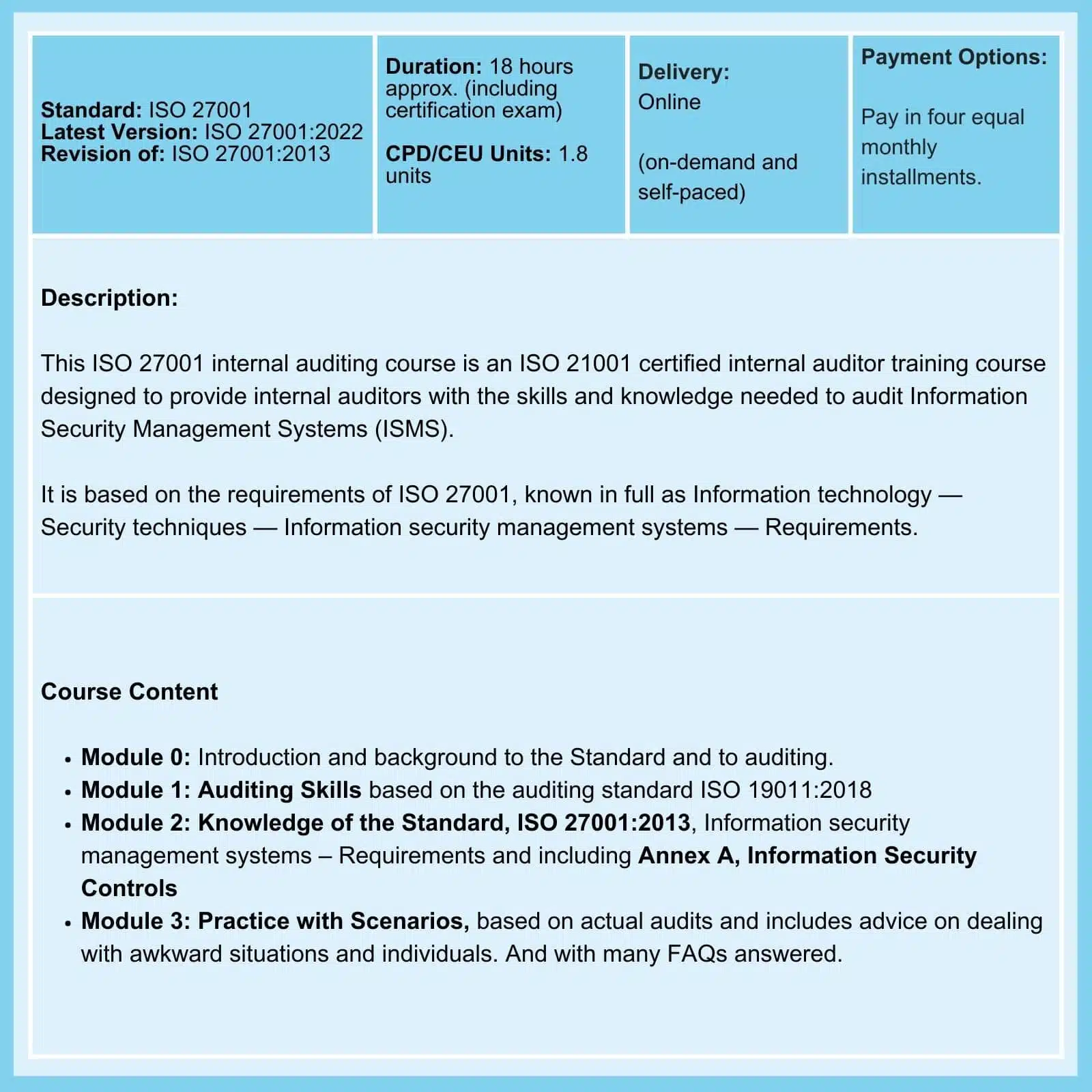
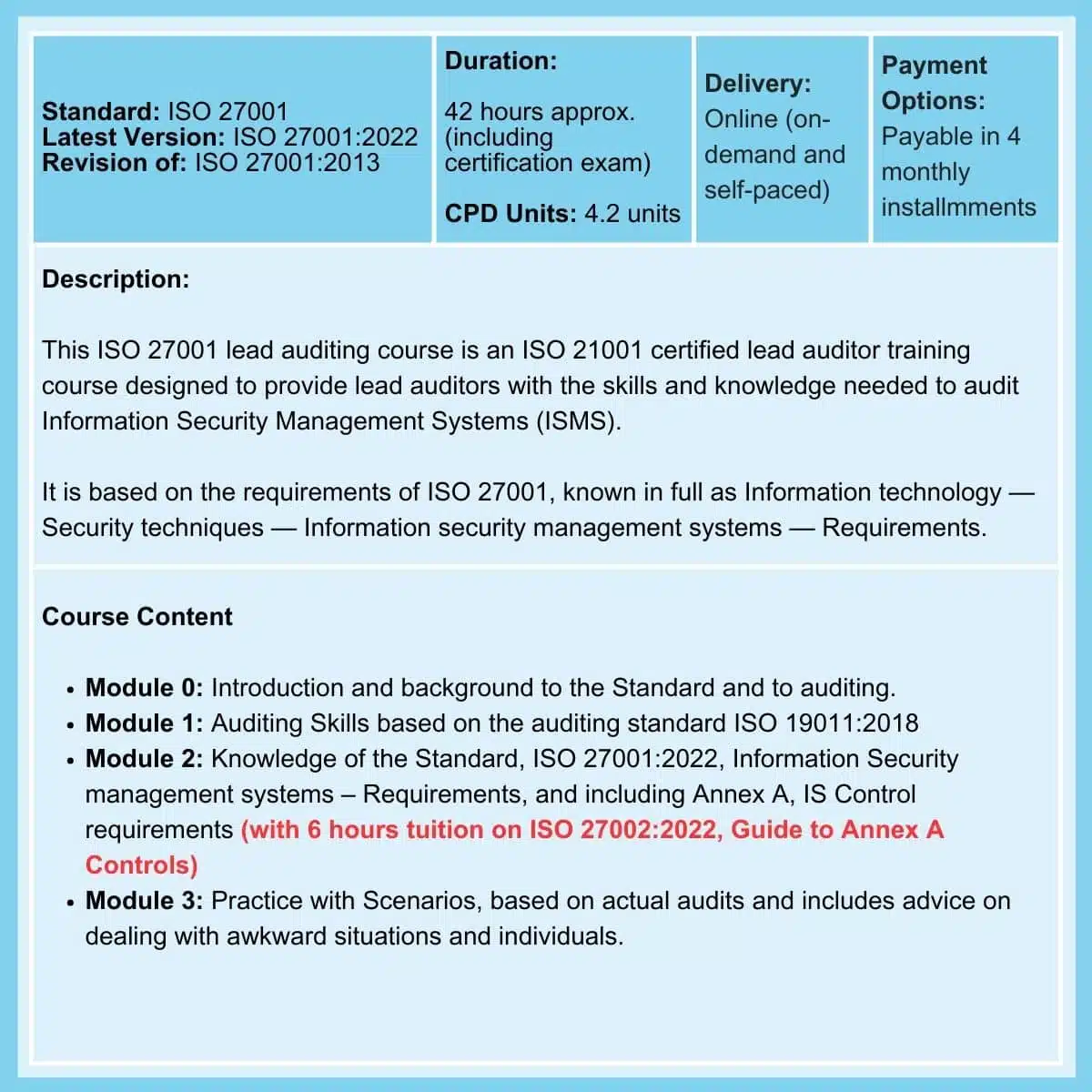
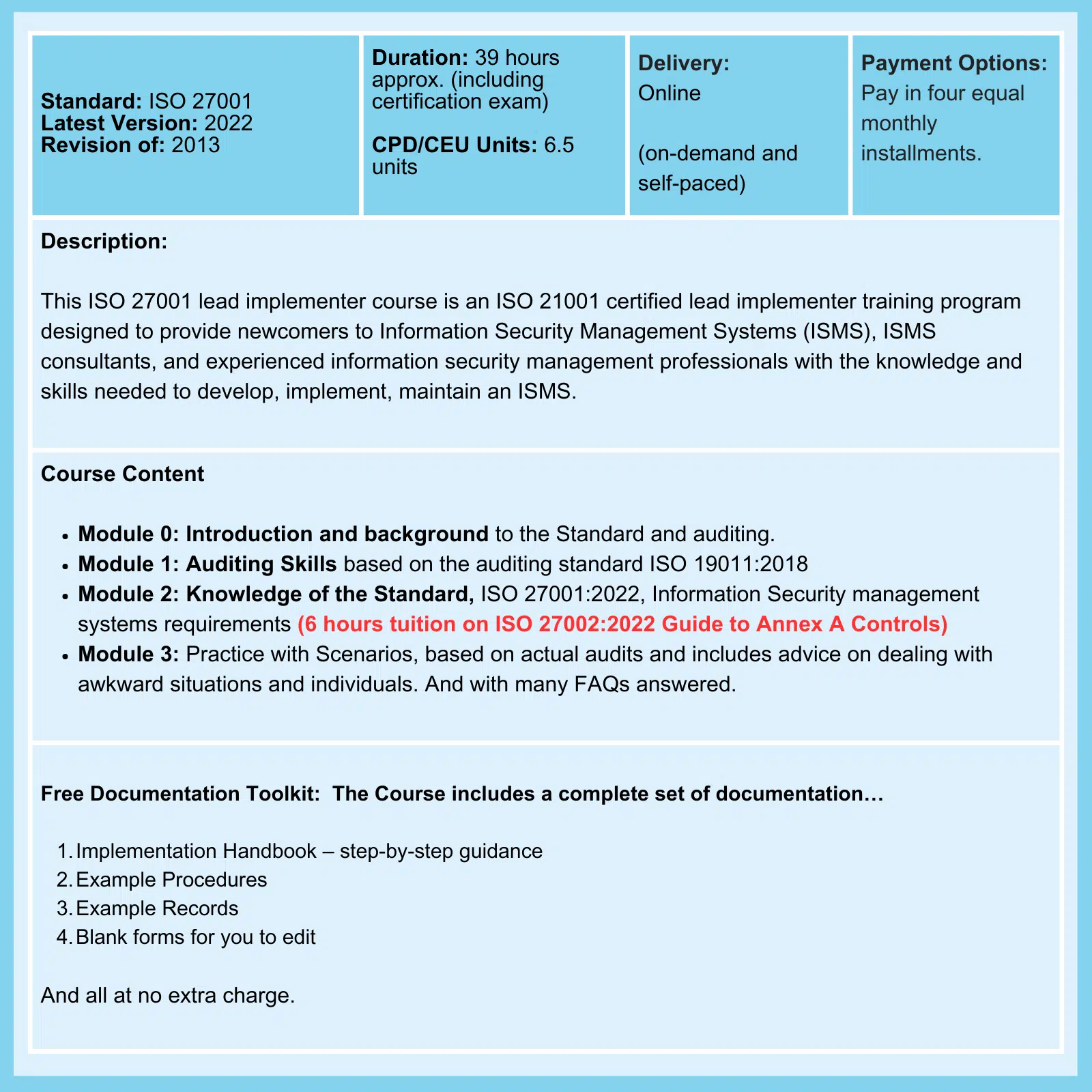
Related Courses
Monthly Offer
Get 25% Off on all ISO 45001 Auditor Training Courses in February
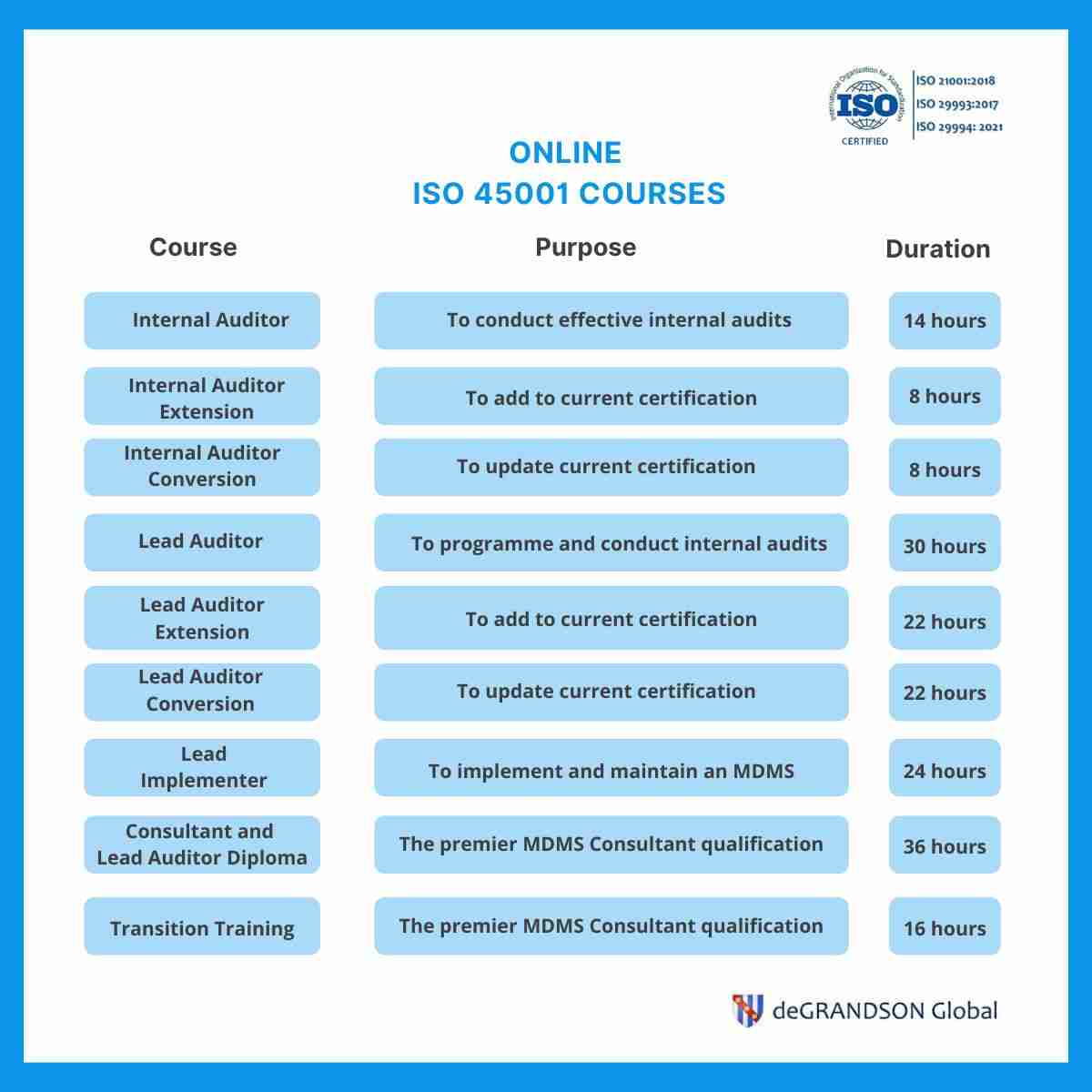
Promo valid until February 28, 2026, BST
Course Author

Dr John FitzGerald graduated with a 1st class honours degree in chemistry and a PhD in synthetic organic chemistry. He worked for 15 years in the manufacturing industry, then as a trainer and consultant in the UK and Ireland before founding deGRANDSON Global in 2009.
He serves as the company Director and course developer while occasionally working as a Lead Auditor on ISO 9001, ISO 13485, ISO 14001, ISO 27001, ISO 45001, and ISO 55001 audits for an accredited certification body (CAB).




Our Certification

deGRANDSON Global has three university-grade management system certification including ISO 21001, Educational Organizational Management System; ISO 29993, Learning Services outside formal Education; and ISO 29994, Learning Services – additional requirements for Distance Learning.
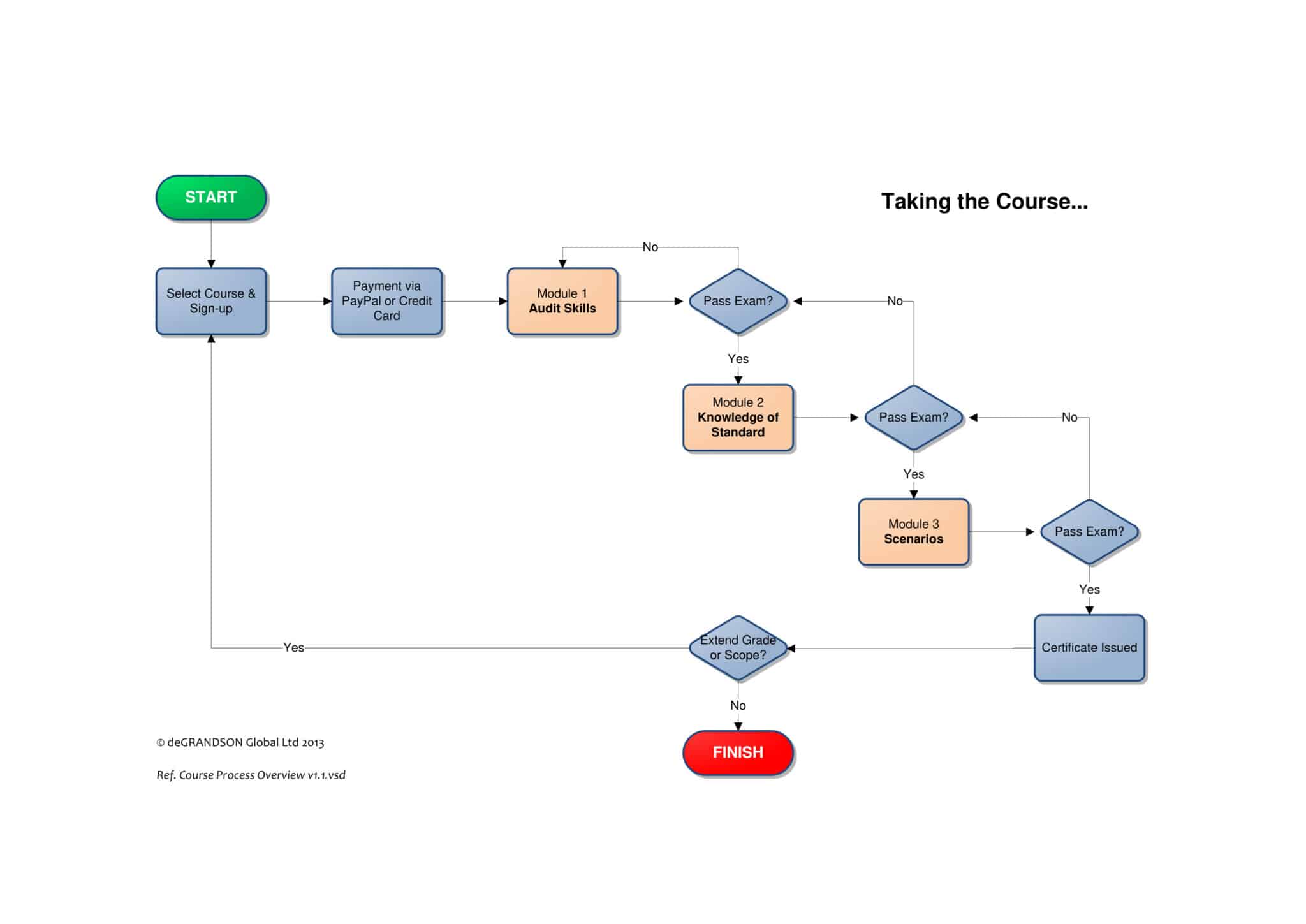
Enrollment, Training, and Certification Process
Group Discount

Get 10, 15, and 25% discount when you enroll 3, 10, 20 or more people.
Free Gap Analysis Tool
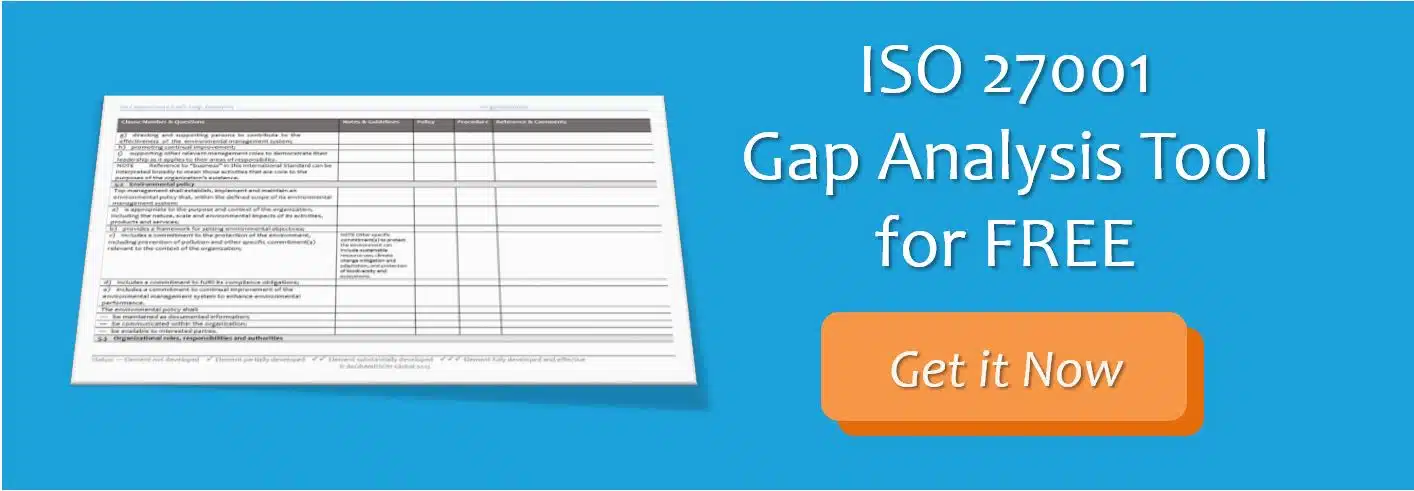
Identify systems or process gaps in your management system that can be improved with our ISO 27001 Gap Analysis tool.
Sample Learner Certificate
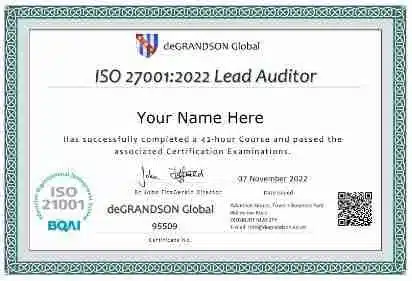
deGRANDSON Global certificates issued to learners who successfully completed the training and passed the certification exam come with QR codes that can be shared on online profiles to instantly verify qualification to prospective clients or employers.
Free ISO 27001 Implementation Handbook
This instruction manual is free with our ISO 27001 Lead Implementer Course. It is not for sale.
It goes over everything you’ll need to develop, implement, and maintain a management system that can achieve ISO 27001 Certification. This includes learning how to:
- Obtain Management Support (ISO 27001 Clause 5.1) – implement necessary security measures, gain your co-workers’ cooperation, and effectively manage information security risks across the organization.
- Assemble ISMS Project Team – Form a team will be in charge of planning, executing, and upholding the ISMS.
- Prepare Gap Analysis and Project Plan – Prepare a gap analysis that will evaluate your organization’s existing information security practices against ISO 27001 requirements and a project plan that will lay out the objectives, scope, and responsibilities for implementing ISO 27001.
- Identify the organization’s context (ISO 27001 Clause 4.1) – Understand your organization’s structure, the specific traits of its industry, its internal culture, its existing security practices, and external factors such as legal requirements, market conditions, and technological advancements that impact it.
- Identify legal and other requirements – Understand industry laws, contracts, standards, and internal policies, and stay updated with changes.
- Identify other interested parties’ needs (ISO 27001 Clause 4.2) – Identify and meet the needs of your organization’s stakeholders, including customers, employees, regulators, and partners.
- Define the scope of the Information Security Management System (ISO 27001 Clause 4.3) – Consider your organization’s context, goals, stakeholders, and assets and uses them to decide which aspects fall within the coverage of the ISMS.
- Prepare the Information Security Policy (ISO 27001 Clauses 4.4 and 5.2) – Prepare an Information Security Policy (ISP) that sets the direction, objectives, and framework of the ISMS as well as the top management’s role in aligning the ISP with organizational goals, legal requirements, and risk management.
- Define key roles and responsibilities (ISO 27001 Clause 5.3) -Identify specific roles vital for the ISMS, assigning clear responsibilities and authority to individuals,
- Develop a Risk Management and Methodology (ISO 27001 Clause 6.1) -Craft a structured approach to identifying threats, vulnerabilities, and their potential impacts on assets.
- Prepare a register of information security assets (ISO 27001 Clause 6.1) – Create an information security asset register that will assist in risk assessment, resource allocation, the implementation of security measures, and the prioritization of risks.
- Prepare a Risk Assessment (Threats and Opportunities) (ISO 27001 Clause 6.1) – Identify threats like cyberattacks, unauthorized access, and potential opportunities and create strategic plans to mitigate them.
- Prepare SoA (ISO 27001 Clause 6.1) – Create a Statement of Applicability (SoA) that details the applicable controls considering risks, legal requirements, and business goals while documenting explanations for excluding irrelevant controls.
- Prepare a Risk Treatment Plan (ISO 27001 Clause 6.1) -Create a Risk Treatment Plan that will enable proactive risk management, goal alignment, continuous improvement, and the strengthening of the management system.
- Prepare Operational Controls (specific responsibilities) (ISO 27001 Clause 6.1) – Define specific responsibilities to manage information security risks efficiently.
- Establish information security objectives (ISO 27001 Clause 6.2) – Establish measurable and achievable information security objectives aligned with an organization’s ISMS.
- Prepare an Information Security Improvement Plan to achieve objectives (ISO 27001 Clause 6.2) – Create an Information Security Improvement Plan that identifies areas for improvement, sets clear objectives aligned with organizational goals, outlines actions needed, and continually reviews progress for ongoing improvement.
- Identify monitoring and measurement needs (ISO 27001 Clause 9.1) – Identify important parameters like KPIs and metrics to assess effectiveness and alignment with information security objectives, along with regular reviews and updates to ensure adaptability with changes
- Develop mandatory and other documentation (ISO 27001 Clauses 4.4 and 7.5) – Create an Information Security Policy (Clause 4.4) that sets objectives and guidelines and shows the top management’s commitment to security while outlining the broader need for documented information in the ISMS (Clause 7.5)
- Establish Operational Controls and Monitoring (ISO 27001 Clause 9.1) – Create controls to manage identified information security risks effectively, then conduct monitoring to assess control performance, effectiveness, and adherence to objectives and compliance requirements.
- Secure required resources (ISO 27001 Clause 7.1) – Ensure organizations have the necessary resources to sustain personnel, technology, training, and infrastructure for establishing, maintaining, and enhancing information security measures.
- Establish initial employee awareness (ISO 27001 Clause 7.3) – Educate staff about their roles, responsibilities, and the importance of information security by conducting training sessions to familiarize employees with security policies, best practices, and guidelines.
- Establish internal and external communication (ISO 27001 Clause 7.4) – Establish solid internal and external communication methods for sharing security-related information with customers, suppliers, regulatory bodies, and other entities.
- Finalize and issue Information Security and Management System Documentation (ISO 27001 Clauses 4.4 and 7.5) – Create a comprehensive Information Security Policy (ISP) as a guiding document (Clause 4.4) then address the broader documentation needs within the ISMS (Clause 7.5).
- Complete job-specific training (ISO 27001 Clause 7.2) – Identify individual training needs based on ISMS responsibilities and provide role-specific training on policies, procedures, and best practices
- Go Live! Procedures and Information Security Objectives Plan (ISO 27001 Clauses 5.1 and 10.1) – Create and maintain documented procedures covering various security-related processes such as risk assessment, training, and incident management (Clause 5.1) and a clear and measurable Information Security Objectives Plan aligned with the organization’s broader business goals (Clause 10.1)
- Implement Risk Treatment Plan (ISO 27001 Clause 5.3) – Implement a Risk Treatment Plan to manage and mitigate identified information security risks.
- Conduct periodic Information Security risk assessment (ISO 27001 Clause 5.2) – Conduct regular Information Security risk assessments to identify, analyze, and assess potential risks to information security.
- Conduct Internal Audits (ISO 27001 Clause 9.2) – Conduct systematic and periodic Internal Audits to identify areas for refining information security practices and ensure compliance and continual improvement.
- Conduct Management Reviews (ISO 27001 Clause 9.3) – Conduct Management Reviews that assess the ISMS’s performance, its alignment with goals, and its effectiveness.
- Implement Improvement (ISO 27001 Clause 10.2) – Implement systematic improvements in your ISMS by planning specific actions to address weaknesses, monitoring their effectiveness, and reviewing outcomes for continual enhancement.