What is an ISO Internal Auditor?
ISO Internal auditors play a key role in every stage of the audit process, beginning with careful planning and preparation. In the initial audit phase, ISO internal auditors define the audit’s scope, objectives, and criteria—setting the stage for a focused and efficient review. They also perform risk assessments to spot potential non-conformities and inefficiencies within business processes.
This risk-based approach ensures the audit is both targeted and comprehensive. During the audit itself, the ISO internal auditor gathers evidence and evaluates compliance against the defined standards. This often involves interviewing employees, reviewing documentation, and observing day-to-day operations.
They also discuss the audit objectives, expectations, and findings with auditees, encouraging collaboration throughout the audit process. Once they’re done with the audit, ISO internal auditors analyze the evidence collected to check how effective and compliant the processes are. They also look for opportunities to improve overall performance. Lastly, ISO internal auditors make sure that they document results accurately and comprehensively so they can provide recommendations for corrective actions or improvements. They may also participate in follow-up activities to verify the implementation of corrective actions.
What is the Difference Between an ISO Internal Auditor and an Internal Auditor?
When people talk about internal auditors, they often mean auditors working in the financial sector. This is because financial internal auditors have clearly defined roles tied to strict regulatory requirements, financial controls, and risk management. However, the scope of internal auditing goes far beyond the financial sector.
ISO internal auditors can work in a wide variety of industries, from
manufacturing to healthcare, automotive to energy services, and food services to
information security, among other examples. Their role is to evaluate whether an organization’s processes comply with
international standards specific to that field.
In contrast, non-ISO internal auditors examine a more comprehensive range of rules and systems. They check many different sectoral standards, internal rules, and
industry-specific lawsor unique quality systems requirements that a company may use. Their audits ensure the company follows all these rules and meets specific industry standards, not just ISO ones.
What Types of Industries do ISO Internal Auditors Work in?
ISO internal auditors can find work in various industries where adherence to international standards is critical for ensuring quality, compliance, and operational efficiency. Some good examples of industries that frequently require the services of skilled ISO internal auditors are the following:
- Construction and Engineering:The construction and engineering sector heavily relies on ISO standards like ISO 9001 (Quality Management Systems and ISO 45001 (Occupational Health and Safety Management Systems)to improve processes, ensure quality in construction projects, and protect workers. Internal auditors verify that both standards are correctly implemented and continuously maintained.
- Healthcare and Pharmaceuticals:Standards like ISO 13485 (Medical Device Management Systems), ISO 9001 (Quality Management System), and ISO 45001 (Occupational Health and Safety Management System) give healthcare and pharmaceutical companies a solid framework for safety, quality, and smooth operations. An ISO internal auditor makes sure these standards are not only followed in theory but also applied effectively to protect people and keep processes running efficiently and continuously improving.
- Manufacturing and Industrial Sectors:Companies in the manufacturing and industrial sectors rely on ISO internal auditors to apply standards like ISO 14001(Environmental Management Systems) to help them manage environmental impacts, reduce waste, and build more sustainable operations.
- Information Technology (IT) and Cybersecurity: The IT sector depends on ISO internal auditors to apply standards likeISO 27001 (Information Security Management Systems) to help organizations keep information secure, protect data, and strengthen their cybersecurity measures.
- Financial Services: Banks, insurance providers, and investment firms rely on ISO internal auditors to apply standards such as ISO 9001 and ISO 27001. More than just checking boxes for compliance, ISO internal auditors help ensure consistent service quality, protect sensitive customer data, and strengthen risk management practices against fraud, cyberattacks, and regulatory breaches.
- Aerospace and Defense: Aviation and defense organizations operate under some of the strictest quality and safety requirements, relying on standards like ISO 9001 and AS9100 to ensure product reliability, supply chain integrity, and regulatory approval. ISO internal auditors help ensure compliance with these strict frameworks to reduce risks tied to equipment failure, safety incidents, and costly production errors.
- Energy and Utilities: The energy sector depends on standards like ISO 50001 (Energy Management Systems) to improve efficiency and support environmental sustainability. ISO internal auditors help organizations monitor compliance and put energy-saving practices into action while addressing risks such as regulatory violations, rising operational costs, equipment downtime, and environmental impact.
- Food and Beverage: Keeping products safe and high-quality is crucial in the food industry. Standards like ISO 22000 (Food Safety Management Systems)and HACCP give companies a clear guide for preventing contamination and ensuring traceability. ISO internal auditors help make sure these standards aren’t just followed on paper but actually work in practice, reducing the risk of recalls, supply chain issues, and damage to brand trust.
What are Internal Auditor Courses?
Internal auditor courses are training solutions for management professionals. They're specifically designed for those who wish to gain the necessary skills and certifications to audit their organization's management system or carry out supplier audits.
Why is ISO Internal Auditor Training Important?
Regular internal audits are important regardless of the size of the organization. Internal audits not only confirm that standards and best practices are being followed but also that companies stay updated on the latest developments. This is why having properly trained and certified ISO internal auditors is so valuable. They provide the checks and insights needed to keep operations compliant, efficient, and continually improving.
What are the Benefits of Being a Certified Internal Auditor or Having One?
Because internal auditors play a critical role in ensuring that processes align with ISO standards, investing in internal auditor training brings several benefits.
First, training gives ISO internal auditors the knowledge and skills to understand and interpret complex ISO standards. Since ISO requirements are regularly updated and revised, keeping auditing knowledge and skills up-to-date is important. Proper training also helps ISO internal auditors understand organizations' unique needs and capabilities better.
This allows them to tailor their auditing approach so that it goes beyond a checkbox exercise and becomes a practical tool for continuous improvement. In addition, trained ISO internal auditors gain proven methods for planning, conducting, and reporting audits in a systematic way, as well as build the communication skills needed to deliver feedback clearly and constructively. Combined, these help organizations save time, improve audit effectiveness, and generate insights that lead to meaningful improvements and actionable recommendations.
How to become an ISO Internal Auditor
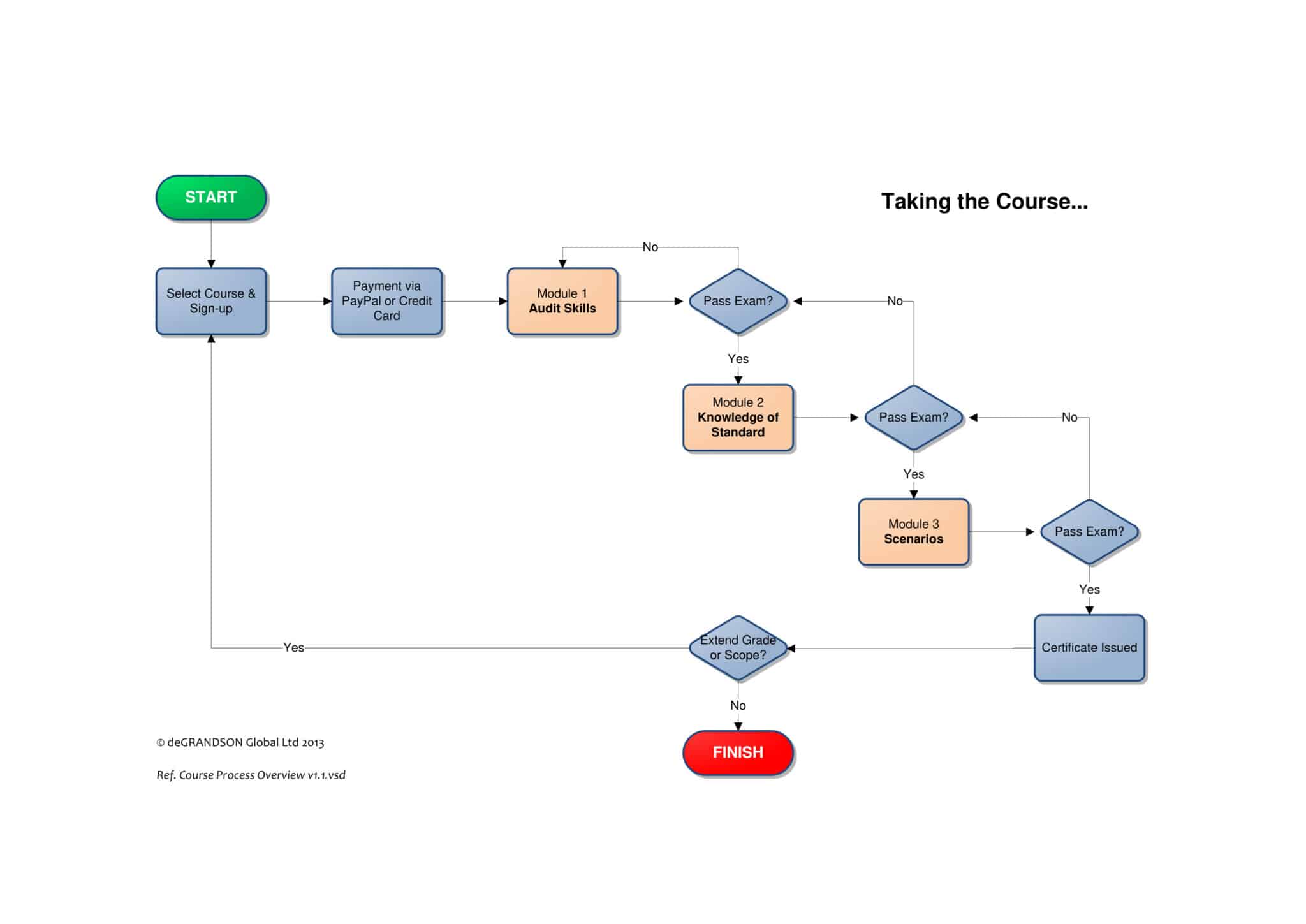
In general, there are five steps that you need to take to become an ISO-certified Internal Auditor.
- Acquire the temperament and personal attributes needed to be a successful ISO Internal Auditor. Ideal attributes for internal auditors include being ethical, open-minded, diplomatic, observant, perceptive, tenacious, decisive, culturally sensitive, able to act with fortitude, etc.
- Gain the technical experience, subject expertise, supervisory and managerial experience needed to conduct an internal audit (See the list of 5 benefits of having trained ISO internal auditors below)
- Complete an ISO-certified internal auditor training course.
- You can choose between a 2-day conventional course or a 12-hour online course.
- Undertake internal audits as often as possible. Three times a year is considered the minimum number of internal audits needed to maintain auditing skills. Finally, have yourself evaluated as a competent ISO internal auditor. Typically, this is done by a QHSE Manager or equivalent and recorded in your personal training/competency record.
What knowledge, skills, certifications, or characteristics do you need to become an ISO Internal Auditor?
Education
Although there are no specific academic requirements to become an ISO internal auditor, certain qualifications can give you an advantage if you are considering pursuing a career in this field. Below are some examples:
- Degree in Quality Management: A degree in Quality Management or Quality Assurance will give you foundational knowledge of quality principles, process improvement methodologies, and compliance frameworks, allowing you to understand ISO standards and auditing practices better.
- Engineering or Technical Degrees: Degrees in engineering disciplines or other technical fields offer a solid understanding of processes, systems, and technical aspects crucial in the operations of various industries. This knowledge base can be a big help when auditing technical processes and ensuring compliance with ISO standards.
- Environmental Sciences or Sustainability: Degrees in Environmental Sciences, Sustainability, or Environmental Management provide insights into environmental regulations, conservation practices, and sustainability principles that can be helpful in auditing compliance with ISO 14001 standards.
- Business Administration or Management: Degrees in Business Administration or Management offer a broader perspective on organizational structures, strategic planning, and operational frameworks. These are critical for understanding how ISO standards integrate into an organization's management systems.
- Health and Safety or Occupational Health Sciences: Degrees in Health and Safety or Occupational Health Sciences can provide expertise in workplace safety regulations, risk management, and health-related standards aligned with ISO 45001 requirements.
- Laboratory Sciences or Metrology: Degrees in Laboratory Sciences, Metrology, or similar fields can greatly help aspiring auditors targeting ISO 17025 standards. Understanding laboratory procedures, testing methods, and quality control principles is essential in this field.
Specialized Training
Specialized training designed to provide comprehensive knowledge and practical skills aligned with the requirements of specific ISO standards is crucial for individuals aiming to become proficient ISO internal auditors. These can include the following:
- ISO Internal Auditor Training Courses: These courses offer fundamental knowledge of ISO standards, auditing principles, methodologies, and practices specific to various ISO standards like ISO 9001 (Quality Management), ISO 14001 (Environmental Management), ISO 27001 (Information Security Management), and others. They cover topics such as audit planning, execution, reporting, and corrective action procedures.
- Lead Auditor Training Programs Lead Auditor training programs go beyond basic auditing techniques and explore the nuances of managing and leading audit processes. Aspiring auditors who participate in this training become proficient in conducting audits and effectively directing and supervising audit teams. (Note that both ISO internal and lead auditor training programs provide flexible learning options that allow individuals to attend traditional classroom-based classes or opt for on-demand, self-paced online training sessions via a learning management system.)
- Industry-Specific Training: Some training programs specialize in specific industries or sectors and build content around the unique challenges and requirements of those industries. For example, industry-specific training for healthcare, manufacturing, construction, or information technology sectors provides focused insights and case studies relevant to those industries.
- In-house Training by Certification Bodies or Consultancies: Some certification bodies and consulting firms offer in-house training programs to address an organization's specific needs. These training sessions are conducted within the company's premises or virtually for its employees. They typically involve in-depth discussions, case studies, and practical examples directly relevant to the organization's operations.
Certifications
Several certification grades are available for individuals aspiring to become ISO internal auditors. These include:
- Internal Auditor Certifications: Specialist Training Providers offer internal auditor certifications tailored to specific ISO standards. These certifications validate individuals' abilities to conduct internal audits, assess conformity, and drive continual improvement within organizations.
- Lead Auditor Certifications: Various Training Providers offer certifications for lead auditors in different ISO standards. These certifications emphasize advanced auditing techniques, leadership in audit processes, managing audit teams, and overseeing complex audits.
- Certifications in Industry-Specific Standards: Training Providers might provide certifications specific to certain industries or sectors built around the same principles as specific ISO standards. Some examples include Certified Professional in Healthcare Quality (CPHQ) for the healthcare industry (ISO 9001), IATF 16949 Certification for the automotive industry (ISO 9001), AS9100 Certification for the aerospace and defense industries (ISO 9001), and FSSC 22000 (Food Safety System Certification) for the food industry (ISO 22000).
Professional Development and Work Experience
Developing expertise as an ISO internal auditor requires a blend of
professional development and hands-on experience. For example, regular participation in internal audits can get you valuable experience in compliance and process improvement. Additionally, shadowing experienced auditors in the workplace can provide invaluable practical exposure to auditing methodologies and compliance frameworks.
Does Internal Auditor Certification Apply to All Standards?
No. An ISO internal auditor trained in the requirements of ISO 9001, the quality system standard, is not equipped to audit against the requirements of, say, ISO 14001, the environmental management system standard. This is for the simple reason that the two standards have very different objectives and significantly different detailed requirements. So, an ISO 9001 Internal Auditor would need additional training (an ISO 14001 Internal Auditor Extension Course) before they were capable of conducting an ISO 14001 audit.
What are Extension Courses?
If you are already an ISO internal auditor but would like to extend the scope of your internal auditor certification, deGRANDSON Global also offers ISO internal auditor extension courses that would help you upgrade your skills. See our Extension courses to learn about a cost-effective way to add new standards to the scope of your auditor certification.
Do You Have a Sample Lesson?
Yes. If you are interested in online ISO auditor training but not ready to start yet, we got you covered. We have a 5 min Trial Lesson that you can take to give you a quick overview of how our online training for ISO courses works. This includes our e-training methods, our certification process, and the differences among our ISO courses.
It also contains tips on how to
find out which course will be appropriate for your needs. If you have more time and you want to take a closer look at our online courses, you can also check out our more detailed
30 min Trial Lesson. It contains an actual lesson sample as well as a short sample test that you can try for yourself.
Where to Find More Information if You Want to Become an ISO Internal Auditor
For more in-depth information about ISO internal auditors, we recommend you read ISO 19011:2018, especially: Part 7: Competence and evaluation of auditors, and Annex A: Additional guidance for auditors planning and conducting audits. You will also find useful information ar Other ISO Courses.